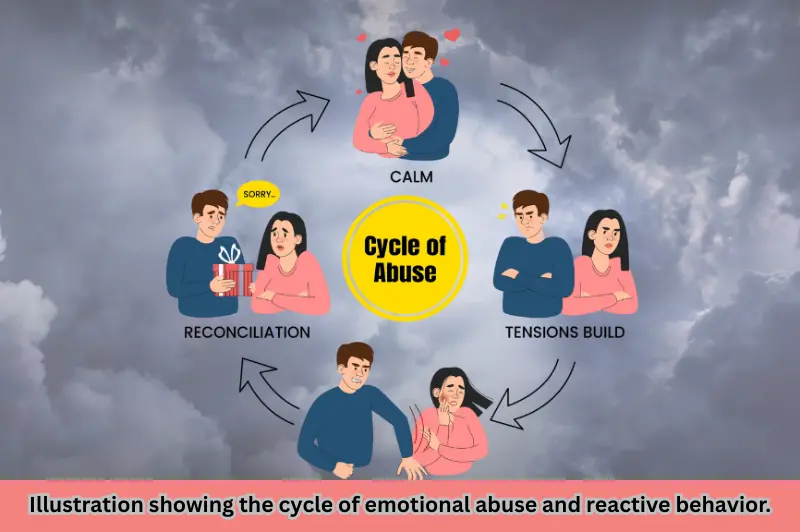

Reactive abuse meaning refers to a situation where a person who has been repeatedly mistreated reacts emotionally—perhaps by yelling, crying, or saying hurtful things—after enduring ongoing abuse. The abusive person may then point to that reaction as “proof” that the victim is the real problem, shifting blame away from their own behavior.
Understanding reactive abuse is important because it helps people recognize manipulation, emotional abuse, and unhealthy relationship patterns. Many survivors feel guilty or confused after reacting strongly to repeated mistreatment. Learning the difference between abuse and a reaction to abuse can reduce self-blame and encourage healthier decisions.
This guide explains the meaning of reactive abuse, how it develops, common warning signs, real-life examples, how it differs from mutual conflict, and practical steps for seeking support and healing.
What Is the Reactive Abuse Meaning?
Reactive abuse is not a clinical or medical diagnosis. Instead, it is a commonly used term describing a person’s emotional or defensive reaction after experiencing ongoing abuse, manipulation, intimidation, or coercive control.
The reaction may include:
- Raising your voice
- Crying uncontrollably
- Throwing objects
- Saying things you later regret
- Defending yourself aggressively
- Leaving suddenly during an argument
Although these reactions may be unhealthy or inappropriate, they usually occur after repeated provocation rather than as part of a pattern of controlling another person.
The key point is that the abusive person often uses this reaction to claim that the victim is actually the abusive one.
How Does Reactive Abuse Happen?
Reactive abuse usually develops gradually rather than during a single disagreement.
A person may experience repeated:
- Emotional abuse
- Verbal insults
- Gaslighting
- Humiliation
- Threats
- Silent treatment
- Isolation
- Constant criticism
Over time, the nervous system remains in a constant state of stress. Eventually, the individual reaches an emotional breaking point and reacts intensely.
The abusive person may then:
- Record the reaction.
- Show others only that moment.
- Ignore what happened beforehand.
- Accuse the victim of being “crazy.”
- Use the reaction to justify further abuse.
This pattern can leave the victim questioning their own memories and behavior.
Common Signs of Reactive Abuse
Recognizing the warning signs can help someone understand whether they’re responding to ongoing abuse rather than causing it.
Emotional Outbursts After Repeated Provocation
The reaction usually follows repeated emotional pressure instead of appearing without warning.
Examples include:
- Shouting after hours of insults
- Crying after repeated humiliation
- Slamming a door after constant intimidation
Feeling Immediate Guilt
Many survivors experience overwhelming guilt after reacting.
They may think:
- “Maybe I’m the abusive one.”
- “I shouldn’t have yelled.”
- “Everything is my fault.”
Feeling guilty about your reaction does not automatically mean you were the primary aggressor.
The Other Person Focuses Only on Your Reaction
Instead of discussing what happened beforehand, the abusive person concentrates entirely on your response.
For example:
“I only yelled because you screamed at me.”
While ignoring:
- Days of insults
- Threats
- Manipulation
- Constant criticism
You Begin Questioning Reality
Many people begin doubting themselves because of repeated gaslighting.
Questions often include:
- “Did that really happen?”
- “Am I remembering correctly?”
- “Maybe I’m overreacting.”
Persistent self-doubt can become one of the strongest effects of emotional abuse.
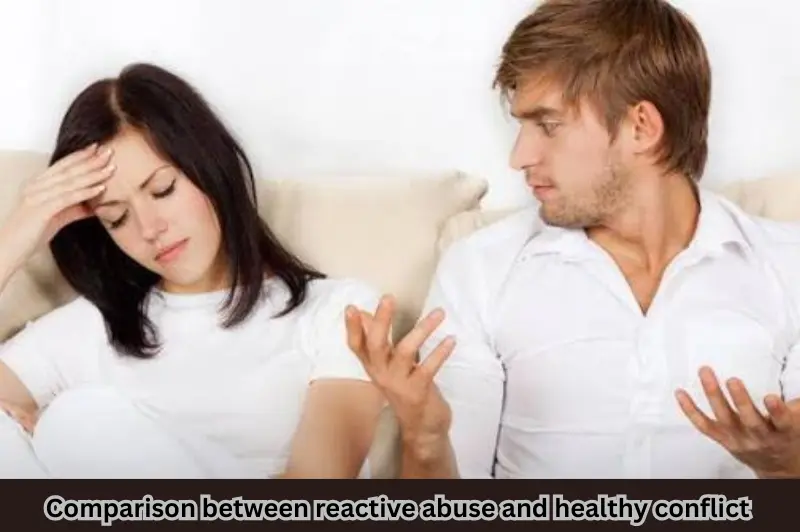
Reactive Abuse vs. Mutual Conflict
Many people confuse reactive abuse with ordinary relationship disagreements. Understanding the difference is important.
| Reactive Abuse | Mutual Conflict |
|---|---|
| One person repeatedly provokes or controls the other | Both people share responsibility for disagreements |
| Emotional reaction follows ongoing mistreatment | Arguments happen without a consistent pattern of abuse |
| Power imbalance exists | Power is relatively balanced |
| One partner manipulates or intimidates | Both partners communicate imperfectly but without coercive control |
| Reaction is used against the victim | Both people acknowledge mistakes and work toward solutions |
Healthy relationships may involve disagreements, but they do not involve consistent intimidation, manipulation, or fear.
Examples of Reactive Abuse
Example 1: Constant Verbal Criticism
One partner spends weeks criticizing the other’s appearance, intelligence, and abilities.
Eventually, the targeted partner yells back in frustration.
The abusive partner immediately says:
“See? You’re abusive.”
The weeks of emotional abuse are ignored.
Example 2: Repeated Gaslighting
A person repeatedly denies things they clearly said and insists their partner is “imagining everything.”
After months of confusion, the partner becomes angry and throws a pillow.
The abusive individual now focuses only on the thrown object while ignoring months of manipulation.
Example 3: Public Humiliation
Someone repeatedly embarrasses their partner in front of family and friends.
After another humiliating comment, the partner storms out and shouts.
Observers who only witness the reaction may misunderstand what actually happened because they did not see the ongoing pattern.
Why Victims React This Way
Reactive responses are often linked to prolonged stress and emotional overwhelm.
When someone experiences ongoing psychological abuse, the body’s stress response can remain activated for extended periods.
Possible effects include:
- Anxiety
- Hypervigilance
- Difficulty regulating emotions
- Trouble sleeping
- Feeling trapped
- Emotional exhaustion
Eventually, even a small trigger may produce a much stronger emotional response than expected.
This does not excuse harmful behavior, but it helps explain why reactions can become intense after prolonged mistreatment.
Can Reactive Abuse Become Harmful?
Yes.
Although reactive abuse usually begins as a response to mistreatment, reactions can still cause harm.
Examples include:
- Screaming
- Breaking belongings
- Physical aggression
- Threatening language
Everyone remains responsible for their own actions, even under extreme stress. However, accountability should include understanding the full context rather than judging a single emotional moment in isolation.
How to Respond if You Think You’re Experiencing Reactive Abuse
If you believe you’re reacting to ongoing abuse, the first priority is your safety and well-being. While every situation is different, these steps can help you regain clarity and protect yourself.
1. Recognize the Pattern
Ask yourself whether your reactions happen only after repeated mistreatment or intimidation.
Consider questions like:
- Do I feel afraid to express my opinions?
- Am I constantly blamed for problems in the relationship?
- Does the other person ignore what happened before my reaction?
- Do I regularly apologize even when I wasn’t at fault?
Looking at the overall pattern—not just one argument—can provide a clearer picture.
2. Keep a Private Record
If it is safe to do so, document incidents by noting:
- Dates and times
- What happened before your reaction
- Messages or emails (where appropriate)
- Witnesses, if any
A factual record can help you identify recurring behaviors and may be useful if you seek professional or legal support.
3. Create Healthy Boundaries
Boundaries communicate what behavior you will and won’t accept.
Examples include:
- Ending conversations that become verbally abusive.
- Leaving the room during escalating conflicts.
- Limiting contact with someone who repeatedly manipulates you.
- Clearly stating expectations for respectful communication.
Healthy boundaries are about protecting yourself—not controlling someone else.
4. Reach Out for Support
Abuse often thrives in isolation. Talking with trusted people can help you gain perspective.
Support may come from:
- Close friends
- Family members
- A licensed mental health professional
- Domestic violence support organizations
- Community resources
If you ever believe you’re in immediate danger, contact your local emergency services.
Tips for Healing After Reactive Abuse
Recovery takes time, but many people regain confidence and emotional stability with the right support.
Helpful strategies include:
- Practice self-compassion instead of self-blame.
- Learn about emotional abuse and manipulation tactics.
- Build a trusted support network.
- Develop stress-management skills such as mindfulness or deep breathing.
- Focus on healthy routines like regular sleep, exercise, and balanced nutrition.
- Consider therapy to process trauma and rebuild self-esteem.
Healing isn’t about becoming “perfect.” It’s about learning healthier ways to respond while recognizing that no one deserves ongoing abuse.
Common Mistakes People Make
Understanding reactive abuse also means recognizing common misconceptions.
Believing One Reaction Defines the Whole Relationship
One emotional outburst does not automatically make someone abusive. Healthy assessment requires looking at the long-term pattern of behavior.
Ignoring the Context
Focusing only on a single argument can hide months or years of manipulation, intimidation, or emotional abuse.
Assuming Reactive Abuse Is a Medical Diagnosis
The term “reactive abuse” is widely used by survivors, advocates, and mental health professionals, but it is not an official mental health diagnosis found in diagnostic manuals.
Excusing Harmful Behavior Entirely
While understanding the context matters, harmful actions should not be ignored. Everyone benefits from learning healthier coping strategies and emotional regulation skills.
Benefits of Understanding Reactive Abuse
Learning about reactive abuse can help people:
- Recognize unhealthy relationship dynamics.
- Reduce unnecessary self-blame.
- Better understand emotional manipulation.
- Seek support earlier.
- Improve communication and personal boundaries.
- Make informed decisions about their relationships.
Knowledge can be the first step toward recovery and healthier future relationships.
Limitations of the Term “Reactive Abuse”
Although the phrase is widely used, it has limitations.
- It is not a formal clinical diagnosis.
- It should not be used to excuse violence or harmful conduct.
- Every relationship requires careful evaluation rather than relying on labels alone.
- Only trained professionals can fully assess complex patterns of abuse and relationship dynamics.
Using the term thoughtfully helps avoid misunderstanding while acknowledging the experiences of survivors.
Understanding the Bigger Picture
Reactive abuse often occurs within broader patterns of coercive control or emotional abuse. The person’s reaction is only one part of the story.
When evaluating a relationship, consider questions such as:
- Is there an ongoing imbalance of power?
- Does one person repeatedly intimidate or manipulate the other?
- Is fear a regular part of the relationship?
- Are apologies expected from only one person?
- Does the same harmful pattern repeat over time?
Looking at the complete picture provides a more accurate understanding than focusing on a single emotional moment.
Learn More About Mental Health and Relationship Wellness
Understanding reactive abuse meaning is one part of building healthier relationships and improving emotional well-being. Exploring topics such as emotional regulation, trauma recovery, anxiety, healthy communication, and therapy can provide additional support. Be sure to explore our related resources on [INTERNAL LINKS] to continue learning about mental health, relationship dynamics, and recovery.
Trusted External Resource
https://www.cdc.gov/intimate-partner-violence/
If you’d like to learn more, explore our guide to emotional abuse and our tips for setting healthy boundaries. These resources can help you better understand unhealthy relationship patterns and support your journey toward healing.
For more support, visit our related guides to learn about emotional abuse, trauma recovery, and building healthier relationships.
Frequently Asked Questions
1. What is the simple reactive abuse meaning?
Reactive abuse meaning refers to a person’s emotional or defensive reaction after experiencing repeated abuse, manipulation, or coercive control. The reaction is often used by the abusive person to shift blame and make the victim appear responsible, even though the abusive behavior occurred first.
2. Is reactive abuse a medical diagnosis?
No. Reactive abuse is not an official mental health diagnosis. It is a commonly used term that describes a pattern in abusive relationships where someone reacts strongly after prolonged mistreatment. Mental health professionals instead assess the underlying behaviors, trauma, and relationship dynamics.
3. Can someone experiencing reactive abuse still make mistakes?
Yes. People under prolonged emotional stress may react in unhealthy ways, such as yelling or saying hurtful things. While these reactions should be acknowledged and addressed, they do not automatically erase the context of repeated abuse that may have contributed to the response.
4. How can I tell the difference between reactive abuse and a normal argument?
Healthy disagreements involve mutual respect, accountability, and a willingness to resolve conflict. Reactive abuse usually involves an ongoing pattern of manipulation, intimidation, gaslighting, or emotional control, followed by an intense reaction that is later used to blame the person who reacted.
5. When should someone seek professional help?
If a relationship regularly causes fear, anxiety, emotional distress, or confusion, speaking with a licensed mental health professional or domestic violence support service can be beneficial. Seeking help early can improve safety, emotional health, and decision-making.
Conclusion
Understanding reactive abuse meaning helps explain why someone may have an intense emotional response after enduring ongoing abuse, manipulation, or coercive control. While those reactions can sometimes be unhealthy, they should always be viewed within the broader context of the relationship rather than in isolation.
Recognizing patterns of emotional abuse, setting healthy boundaries, seeking support, and prioritizing personal safety are important steps toward recovery. If you identify with the situations described in this article, remember that you don’t have to navigate them alone. Trusted friends, licensed mental health professionals, and support organizations can help you better understand your experiences and move toward healthier relationships.