
Vape withdrawal symptoms can begin within hours of stopping nicotine and may affect both your body and mind. While these symptoms can feel challenging, they are a normal part of recovery as your brain and body adjust to functioning without nicotine.
Whether you’re quitting vaping for health reasons, saving money, or breaking nicotine dependence, understanding what to expect can make the process less overwhelming. This guide explains the most common vape withdrawal symptoms, why they occur, how long they typically last, and practical strategies to cope with cravings and discomfort.
What Are Vape Withdrawal Symptoms?
Vape withdrawal symptoms are the physical, emotional, and mental changes that occur after reducing or stopping nicotine use from e-cigarettes or other vaping devices.
Nicotine is a highly addictive substance that affects the brain’s reward system. Over time, your brain becomes accustomed to regular nicotine intake. When vaping stops, the sudden drop in nicotine causes withdrawal symptoms until your body adapts.
Not everyone experiences withdrawal in the same way. The intensity depends on factors such as:
- How long you’ve been vaping
- How often you vape
- The nicotine strength in your vape
- Your age and overall health
- Whether you’ve tried quitting before
The good news is that withdrawal symptoms are temporary, and they gradually improve with time.
Common Vape Withdrawal Symptoms
Most people experience a combination of physical and emotional symptoms after quitting nicotine. These symptoms usually begin within the first day and gradually decrease over the following weeks.
Intense Nicotine Cravings
Cravings are often the most difficult symptom to manage. They may come in waves and are commonly triggered by daily routines, stress, or situations where you previously vaped.
Cravings usually last only a few minutes, although they may feel longer in the moment.
Irritability and Mood Changes
Many people become more irritable, frustrated, or impatient after quitting vaping. This happens because nicotine temporarily influences chemicals in the brain that regulate mood.
You may notice:
- Short temper
- Restlessness
- Increased stress
- Feeling emotionally sensitive
These feelings generally become less intense as your brain adjusts.
Anxiety
Some people experience temporary anxiety or nervousness during nicotine withdrawal. Although nicotine may seem calming, it actually contributes to dependence, making withdrawal feel stressful at first.
Learning healthy coping strategies can help reduce anxiety during this period.
Difficulty Concentrating
Many people report feeling mentally foggy or having trouble focusing during the first several days after quitting.
This symptom is temporary and often improves as the brain restores its natural balance.
Trouble Sleeping
Changes in sleep are common during nicotine withdrawal.
You may experience:
- Difficulty falling asleep
- Waking during the night
- Vivid dreams
- Feeling tired during the day
Establishing a consistent bedtime routine can support better sleep while your body adjusts.
Increased Appetite
Nicotine can suppress appetite. After quitting, it’s common to feel hungrier than usual or crave snacks, especially sweets.
Choosing nutritious foods and staying hydrated can help manage increased hunger without replacing vaping with unhealthy eating habits.
Headaches
Headaches may occur as your body adapts to life without nicotine. Drinking enough water, getting adequate rest, and limiting caffeine can often help ease discomfort.
Restlessness
Many former vapers feel physically restless or have difficulty relaxing during the early stages of withdrawal.
Regular exercise, stretching, or short walks can help reduce this feeling.
Low Mood
Some people temporarily experience sadness or reduced motivation after quitting nicotine.
If feelings of depression become severe, persist for several weeks, or interfere with daily life, it’s important to seek support from a healthcare professional.
Why Do Vape Withdrawal Symptoms Happen?
Nicotine stimulates the release of dopamine, a neurotransmitter involved in pleasure, motivation, and reward.
With repeated nicotine exposure, the brain adapts by expecting regular nicotine intake. When vaping stops, dopamine levels temporarily decrease, leading to withdrawal symptoms.
This adjustment is a normal biological response—not a sign that quitting is impossible.
As your brain gradually returns to its natural balance, withdrawal symptoms become less frequent and less intense.
Who Experiences the Strongest Withdrawal Symptoms?
Withdrawal varies from person to person. Symptoms may be stronger if you:
- Vape frequently throughout the day
- Use high-nicotine vape products
- Have vaped for several years
- Started vaping at a young age
- Have previously struggled with nicotine dependence
Even if withdrawal feels intense initially, most symptoms improve significantly within the first few weeks.
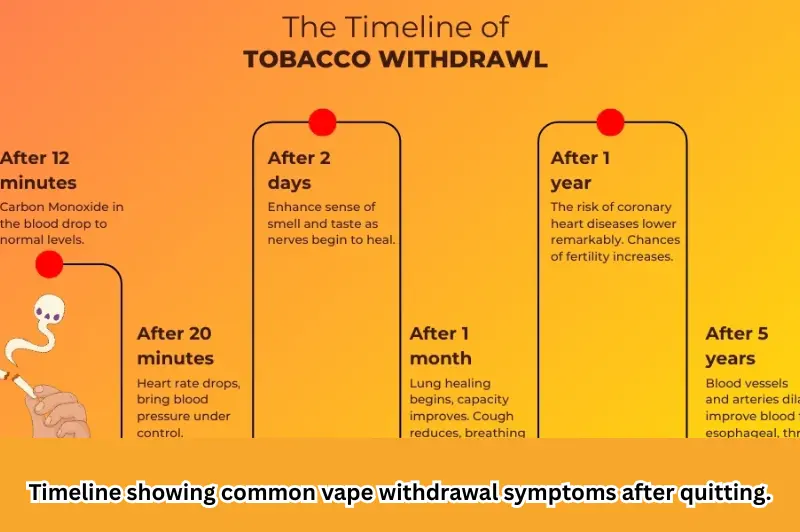
How Long Do Vape Withdrawal Symptoms Last?
The timeline for vape withdrawal symptoms varies from person to person, but most people follow a similar pattern. Factors such as how long you vaped, the nicotine strength, and your overall health can all influence recovery.
| Time After Quitting | What You May Experience |
|---|---|
| 4–24 hours | Cravings begin, irritability, restlessness, and anxiety may appear. |
| Days 2–3 | Withdrawal symptoms usually peak. Cravings, headaches, mood changes, and difficulty concentrating are often strongest. |
| Week 1 | Physical symptoms begin to improve, although emotional symptoms may continue. |
| Weeks 2–4 | Most withdrawal symptoms become much milder. Cravings occur less often and are easier to manage. |
| After 1 month | Many people feel significantly better, though occasional cravings can still occur, especially when triggered by stress or old habits. |
Remember that psychological cravings may last longer than physical withdrawal, but they generally become less frequent over time.
How to Manage Vape Withdrawal Symptoms
There is no way to eliminate withdrawal completely, but healthy coping strategies can make quitting much more manageable.
Stay Hydrated
Drinking water throughout the day may help reduce dry mouth and keep you feeling refreshed. It can also provide a simple distraction when cravings strike.
Keep Your Hands and Mouth Busy
Many people miss the habit of holding or using a vape.
Helpful alternatives include:
- Sugar-free gum
- Toothpicks
- Healthy snacks like carrots or apple slices
- A reusable water bottle
Replacing the habit can make the transition easier.
Exercise Regularly
Even a 20-minute walk can:
- Reduce nicotine cravings
- Improve mood
- Lower stress
- Increase energy
Physical activity also supports overall health during recovery.
Get Enough Sleep
Withdrawal can temporarily affect sleep quality. Aim for a consistent bedtime and avoid caffeine late in the day to improve rest.
Identify Your Triggers
Certain situations often trigger vaping urges, such as:
- Drinking coffee
- Driving
- Feeling stressed
- Spending time with friends who vape
Recognizing these triggers helps you prepare healthier responses.
Consider Nicotine Replacement Therapy
For some adults, nicotine replacement therapy (NRT)—such as patches, gum, or lozenges—can reduce withdrawal symptoms and improve the chances of quitting successfully. Talk with a healthcare professional to determine whether NRT is appropriate for your situation.
Common Mistakes When Quitting Vaping
Avoiding these common mistakes can improve your chances of quitting successfully.
- Expecting withdrawal to disappear overnight
- Believing one puff won’t matter
- Replacing vaping with excessive sugary snacks
- Not planning for cravings
- Trying to quit without support when support is available
- Giving up after a temporary setback
Many people make multiple quit attempts before quitting for good. A setback doesn’t mean you’ve failed—it can help you learn what works better next time.
When Should You Seek Professional Help?
Most vape withdrawal symptoms improve on their own. However, consider speaking with a healthcare provider or mental health professional if you:
- Feel unable to control nicotine use despite repeated attempts
- Experience severe anxiety or depression after quitting
- Notice symptoms interfering with work, school, or daily life
- Need additional support through counseling or medication
Professional guidance can make quitting safer and more successful.
Internal Linking Opportunity
If you’re working toward better overall mental and physical well-being, quitting nicotine is only one part of the journey. Explore our other resources on anxiety, stress management, addiction recovery, and healthy coping strategies to build long-term habits that support lasting wellness.
Trusted External Resource
For evidence-based information on quitting nicotine and tobacco products, visit the Centers for Disease Control and Prevention (CDC): https://www.cdc.gov/quit.
Frequently Asked Questions
1. What are the first vape withdrawal symptoms?
The earliest symptoms usually include nicotine cravings, irritability, anxiety, restlessness, and difficulty concentrating. These often begin within the first 4 to 24 hours after your last vape and gradually change over the following days.
2. How long do vape withdrawal symptoms last?
Most physical symptoms improve within two to four weeks. Cravings may continue for longer, especially in situations associated with previous vaping habits, but they usually become less frequent and less intense over time.
3. Is quitting vaping harder than quitting cigarettes?
It depends on the individual. Both products can contain nicotine and lead to dependence. Some people find vaping harder to quit because they use it more frequently throughout the day, while others have different experiences.
4. Can exercise help reduce vape withdrawal symptoms?
Yes. Regular physical activity may reduce cravings, improve mood, relieve stress, and boost energy levels. Even light exercise, such as walking, can be beneficial during nicotine withdrawal.
5. Should I quit vaping all at once or gradually?
There isn’t a single approach that works for everyone. Some people succeed by quitting abruptly, while others benefit from gradually reducing nicotine or using nicotine replacement therapy under the guidance of a healthcare professional.
Conclusion
Vape withdrawal symptoms are a temporary but normal part of breaking nicotine dependence. While cravings, mood changes, headaches, and difficulty concentrating can be challenging, they usually improve within a few weeks as your brain and body adjust.
The key to success is preparing for withdrawal, using healthy coping strategies, and seeking support if needed. Every day without nicotine is a step toward better physical health, improved mental well-being, and greater freedom from addiction.