
What is emotional incest? Emotional incest, also called covert incest, is a form of unhealthy family dynamics where a parent relies on their child for emotional support in ways that are more appropriate for another adult. While there is no sexual contact, the emotional boundaries between parent and child become blurred, placing responsibilities on the child that they are not developmentally equipped to handle.
This article explains what emotional incest is, how it differs from a close parent-child relationship, common signs, causes, long-term psychological effects, practical examples, healing strategies, and when professional support may help. Whether you’re trying to understand your childhood experiences or support someone else, this guide provides balanced, evidence-based information.
What Is Emotional Incest?
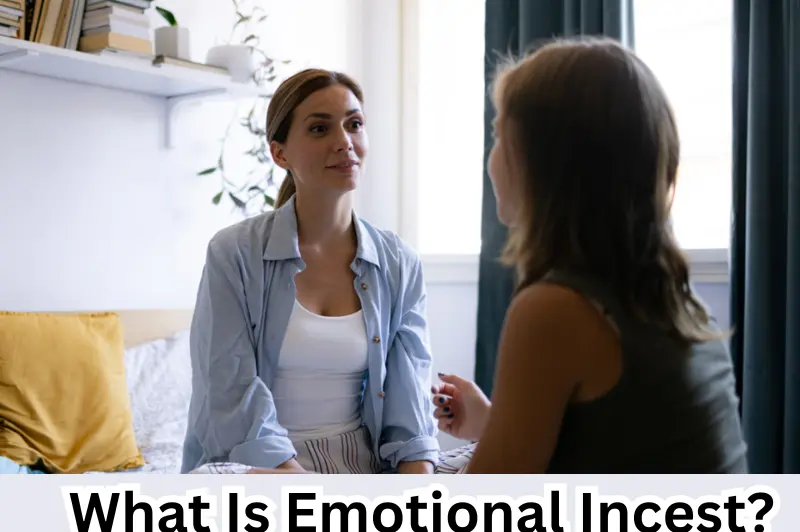
Emotional incest is a type of emotional boundary violation in which a parent unconsciously or intentionally treats their child like an emotional partner instead of a child.
The child may become:
- The parent’s primary emotional confidant
- A source of comfort during relationship problems
- Responsible for managing the parent’s emotions
- Expected to provide reassurance and companionship beyond normal parent-child roles
what is emotional incestUnlike healthy emotional closeness, emotional incest reverses family roles. Instead of the parent caring for the child’s emotional needs, the child becomes responsible for the parent’s emotional wellbeing.
Mental health professionals often describe this as covert incest because the inappropriate emotional dependence is hidden and may appear loving or close from the outside.
Emotional Incest vs. Healthy Parent-Child Relationships
Understanding the difference is important because emotional incest often develops gradually.
| Healthy Relationship | Emotional Incest |
|---|---|
| Parent provides emotional support | Child provides ongoing emotional support to parent |
| Age-appropriate responsibilities | Child carries adult emotional burdens |
| Healthy boundaries | Blurred emotional boundaries |
| Child encouraged to develop independence | Parent discourages emotional separation |
| Parent seeks adult support elsewhere | Parent relies mainly on the child |
A close family relationship is not emotional incest. The concern arises when emotional dependence consistently places adult responsibilities on the child.
Common Signs of Emotional Incest
Several patterns may indicate emotional incest within a family.
The Parent Shares Adult Problems
Parents may regularly discuss:
- Marriage conflicts
- Financial stress
- Dating issues
- Loneliness
- Personal disappointments
While occasional honest conversations are normal, repeatedly expecting a child to solve or absorb these problems is not.
The Child Feels Responsible for the Parent’s Happiness
Children may believe they must:
- Keep the parent happy
- Prevent emotional breakdowns
- Stay available at all times
- Sacrifice their own needs
This responsibility often continues into adulthood.
Poor Emotional Boundaries
The parent may:
- Expect complete loyalty
- Become jealous of the child’s friendships or romantic relationships
- Demand excessive attention
- Guilt the child for becoming independent
Parentification
Emotional incest frequently overlaps with parentification, where children take on adult caregiving roles.
Instead of enjoying childhood, they become emotional caretakers.
What Causes Emotional Incest?
what is emotional incest Emotional incest usually develops because of unhealthy family patterns rather than intentional harm.
Common contributing factors include:
Divorce or Separation
After separation, one parent may unconsciously rely on a child for companionship instead of seeking adult support.
Emotional Loneliness
what is emotional incest Parents who feel isolated may begin treating a child as their closest emotional connection.
Mental Health Challenges
Conditions such as anxiety, depression, unresolved trauma, or personality difficulties may increase emotional dependence.
Lack of Adult Support
Without healthy friendships, partners, or family support, parents may unknowingly shift emotional needs onto their children.
Practical Examples of Emotional Incest
Examples can help clarify the concept.
Example 1
A mother regularly tells her teenage son detailed information about her relationship problems and expects him to comfort her after arguments.
Example 2
what is emotional incest A father tells his daughter she is “the only person who understands me” and becomes upset whenever she spends time with friends.
Example 3
A parent repeatedly says:
- “You’re all I have.”
- “Don’t leave me.”
- “I need you more than anyone.”
what is emotional incest These statements may create overwhelming emotional responsibility for the child.
How Emotional Incest Affects Children
Children experiencing emotional incest often develop coping strategies that help them survive childhood but become challenging later in life.
Difficulty Setting Boundaries
Adults may struggle to say no without feeling guilty.
People-Pleasing
Many become highly focused on meeting everyone else’s needs before their own.
Anxiety and Stress
Constant emotional responsibility can lead to:
- Chronic stress
- General anxiety
- Emotional exhaustion
Low Self-Esteem
Children may grow up believing their value comes from taking care of others.
Relationship Difficulties
Adult relationships may involve:
- Overgiving
- Fear of rejection
- Emotional dependence
- Difficulty trusting others
Long-Term Effects in Adulthood
Not everyone experiences the same outcomes, but emotional incest can influence adult mental health.
Possible long-term effects include:
- Difficulty identifying personal needs
- Fear of disappointing others
- Perfectionism
- Codependent relationships
- Emotional burnout
- Depression
- Challenges maintaining healthy romantic relationships
- Problems with self-identity
Recognizing these patterns is often the first step toward healing.
Emotional Incest Is Different From Sexual Abuse
One of the biggest misconceptions is that emotional incest involves sexual contact.
It does not.
However, it is still considered emotionally harmful because it places inappropriate emotional expectations on a child.
Key differences include:
- Emotional incest involves emotional boundary violations.
- Sexual abuse involves sexual behavior or sexual contact.
- Both can have lasting psychological effects, but they are distinct experiences.
How to Heal From Emotional Incest
Healing is possible, although it often takes time.
1. Recognize the Family Pattern
Understanding that unhealthy boundaries existed can reduce self-blame.
2. Learn Healthy Boundaries
Healthy boundaries may include:
- Saying no respectfully
- Limiting emotionally draining conversations
- Protecting personal time
- Separating your emotions from someone else’s
3. Build Your Own Identity
Explore:
- Personal interests
- Career goals
- Friendships
- Hobbies
- Personal values
Learning who you are outside of caregiving is an important part of recovery.
4. Practice Self-Compassion
Many adults raised in emotionally enmeshed families criticize themselves harshly.
Replacing self-criticism with compassion supports emotional healing.
5. Consider Professional Therapy
A licensed mental health professional can help identify unhealthy family patterns, strengthen boundaries, and process unresolved childhood experiences.
Tips for Building Healthier Relationships
As you heal, these habits can improve emotional wellbeing:
- Communicate openly without taking responsibility for others’ feelings.
- Allow others to solve their own problems.
- Spend time with supportive friends.
- Learn to tolerate healthy conflict.
- Practice saying “no” without excessive guilt.
- Prioritize self-care consistently.
Small, consistent changes often create lasting improvement.
Common Mistakes When Understanding Emotional Incest
Many people misunderstand this topic.
Avoid these common assumptions:
- Assuming every close parent-child relationship is emotional incest.
- Believing the parent intended harm in every case.
- Ignoring the impact because there was no physical abuse.
- Feeling guilty for setting healthy boundaries.
- Expecting healing to happen quickly.
Every family situation is unique, and context matters.
When Should You Seek Professional Help?
Professional support may be helpful if childhood family dynamics continue affecting daily life.
Consider reaching out if you experience:
- Persistent anxiety
- Depression
- Repeated unhealthy relationships
- Difficulty trusting others
- Severe guilt when setting boundaries
- Emotional exhaustion from caregiving
Early support can improve emotional wellbeing and relationship health.
Internal Linking Opportunity
If your website includes related mental health resources, naturally link readers to [INTERNAL LINKS] for more guidance on topics such as childhood trauma, family boundaries, anxiety, codependency, emotional regulation, and therapy options. Connecting related articles helps readers better understand how these issues may overlap and supports a more comprehensive learning experience.
Trusted External Reference
For additional information about healthy child development and supportive parenting practices, readers can refer to the American Academy of Pediatrics (AAP), a trusted source of evidence-based guidance for families and healthcare professionals.
Frequently Asked Questions
1. Is emotional incest considered abuse?
Many mental health professionals consider emotional incest a form of emotional abuse or emotional boundary violation because it places adult emotional responsibilities on a child. Even without physical or sexual contact, the experience can have lasting effects on emotional development, relationships, and self-esteem.
2. Can emotional incest happen without the parent realizing it?
Yes. In many families, parents are unaware that their emotional dependence is inappropriate. They may genuinely love their child while unknowingly creating unhealthy emotional boundaries due to loneliness, trauma, divorce, or lack of adult support.
3. What is the difference between emotional incest and parentification?
Parentification involves children taking on adult responsibilities, such as caregiving or household management. Emotional incest specifically involves meeting a parent’s emotional needs. The two often occur together but are not exactly the same.
4. Can someone recover from emotional incest?
what is emotional incest Yes. Recovery is possible through increased awareness, healthier boundaries, supportive relationships, and, when appropriate, therapy. Many adults learn to develop stronger self-esteem, healthier communication skills, and more balanced relationships over time.
5. How do I know if my childhood experience was emotional incest?
what is emotional incest If you consistently felt responsible for your parent’s emotional wellbeing, acted as their main confidant, struggled to separate from them, or continue feeling guilty for prioritizing your own needs, these experiences may reflect emotional incest. A qualified mental health professional can provide an accurate assessment based on your personal circumstances.
Conclusion
what is emotional incest is an unhealthy family dynamic in which a child becomes responsible for meeting a parent’s emotional needs. Although it does not involve sexual contact, it can significantly affect emotional development, self-esteem, boundaries, and adult relationships. Recognizing the signs is an important first step toward healing.what is emotional incest By learning healthy boundaries, building supportive relationships, practicing self-compassion, and seeking professional help when needed, many people are able to recover and create healthier emotional connections throughout life.